
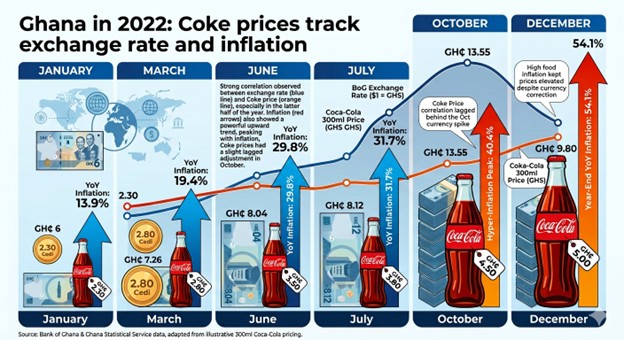
Africa’s most resilient businesses have quietly engineered a solution to one of the continent’s most persistent economic challenges. Operating in weak and volatile currency environments, many have rebuilt their value chains around the problem. When exchange rates move, they reprice in near real-time, passing currency risk through to end markets rather than absorbing it. That capability is not improvised. It is supported by distribution infrastructure, through flexible retail networks, mobile commerce channels, and tiered pricing models, specifically designed to protect margins when local currencies weaken. These companies do not merely endure soft currencies. They have structured their operations so that devaluations trigger pricing adjustments faster than they erode debt-service capacity.
That operational reality is almost entirely invisible to the lenders pricing their debt.
The cost of capital across Africa remains significantly elevated, a handicap investors call the “Africa premium.” Akinwumi Adesina, outgoing president of the African Development Bank, puts it bluntly: the cost of raising capital in Africa is three or four times what it is in other regions, driven by perception rather than reality. Its primary driver at the corporate level is currency risk, with lenders embedding exchange rate volatility into credit spreads as an undifferentiated cost. The assumption is that volatility automatically translates into impairment.
For a large and growing segment of African businesses, that assumption is outdated.
Critics of the existing ratings framework argue that the major agencies have applied models that fail to capture the nuance of African economies, a problem compounded at the corporate level by frameworks that treat currency exposure as a static liability rather than a managed risk. Currency risk and credit risk are distinct, yet conventional models bundle them into a single spread, making operationally sound companies appear riskier than peers in developed markets.
A more rigorous assessment would ask different questions. How quickly does pricing adjust after a currency move? What share of the distribution network enables rapid margin recalibration? For companies that answer those questions well, actual default probability is often far closer to global peers than current spreads imply.
The Africa premium is real. But for the continent’s most operationally agile companies, it reflects an analytical gap more than genuine risk. Closing that gap is not just a matter of fairness. It is one of the more compelling mispricings in global credit markets today.