
When Markets Grow Noisy, Capital Moves Quietly

Institutional investors are quietly reshaping portfolios in a way that could redefine modern asset allocation. For decades, the traditional 60/40 portfolio of stocks and bonds served as the foundation of institutional investing. Increasingly, however, private markets are claiming a larger share of that role. A recent survey of institutional investors found that more than half […]

Why Investment Firms Are Increasing Focus on Private Infrastructure Deals As public markets grapple with volatility and economic uncertainty, investment firms are increasingly turning to private infrastructure as a source of stable returns and long-term value creation. Traditionally dominated by governments, infrastructure investing has evolved into a major asset class attracting private equity firms, pension […]
America’s Stock Market Has a Dependence Problem

Wall Street says the stock market is healthy. The numbers suggest something more fragile. The S&P 500 continues pushing toward record highs, but beneath the surface, fewer companies are carrying more of the market’s weight. A small group of mega-cap technology firms now drives an outsized share of profits, investor flows and overall index performance. […]
Spirit Airlines: Why Private Credit Said No

Spirit Airlines ceased operations on May 2, 2026. For anyone tracking its credit profile, the only question was timing. At the time of its first bankruptcy filing, Spirit had accumulated more than $2.5 billion in losses since 2020. Long-term debt stood at $3.3 billion, with $1.27 billion maturing in 2025. There was no cash generation […]
Africa’s Debt Wall Is a Liquidity Test, Not a Default Event

Africa’s $11B+ Eurobond maturities in 2026–27 is often framed as a looming default wave. That framing misses the point. This is less a solvency crisis than a test of liquidity of who can refinance, at what price, and under what conditions. The key risk is concentration in timing, not just size. Sovereigns are entering a […]
The Growth Paradox: Private Credit’s First Real Test

Private credit has become one of modern finance’s fastest-growing success stories. But rapid growth and proven resilience are not the same thing. The industry’s rise follows a familiar pattern of financial innovation. High-yield debt broadened the credit universe in the 1970s. Leveraged buyouts accelerated borrowing in the 1980s. Broadly syndicated loans and securitization expanded funding […]
One Portfolio, Different Outcomes

Private credit promises consistency, the same loans, the same borrowers, the same cash flows. Yet investors rarely experience it the same way. The difference lies not in the asset, but in how access is structured. At the institutional level, scale and negotiating power drive costs down. Large investors commit significant capital, often directly or through […]
Priced Wrong: Why Africa’s Best Companies Are Paying for a Risk They Have Already Solved
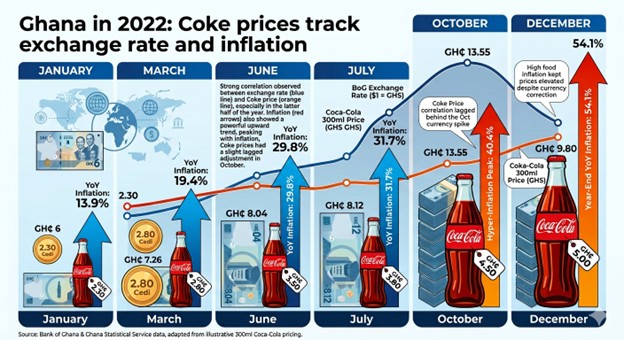
Africa’s most resilient businesses have quietly engineered a solution to one of the continent’s most persistent economic challenges. Operating in weak and volatile currency environments, many have rebuilt their value chains around the problem. When exchange rates move, they reprice in near real-time, passing currency risk through to end markets rather than absorbing it. That […]
Redemption Gates Aren’t a Flaw, They’re a Safeguard

In recent months, several private-credit funds have limited investor withdrawals after redemption requests exceeded preset thresholds. Critics have seized on these “gates” as evidence that the asset class lacks liquidity. In reality, the mechanism exists for a different reason: protecting investors from the very instability gates are meant to prevent. Unlike publicly traded bonds or […]
Oil, War and Private Credit’s Resilience

The latest escalation in the Middle East is forcing investors to rethink one of the biggest assumptions of 2026: that global interest rates were finally headed lower. Oil markets have reacted quickly. Supply disruptions linked to the conflict with Iran and tensions around the Strait of Hormuz, a route that carries roughly 20% of the […]